
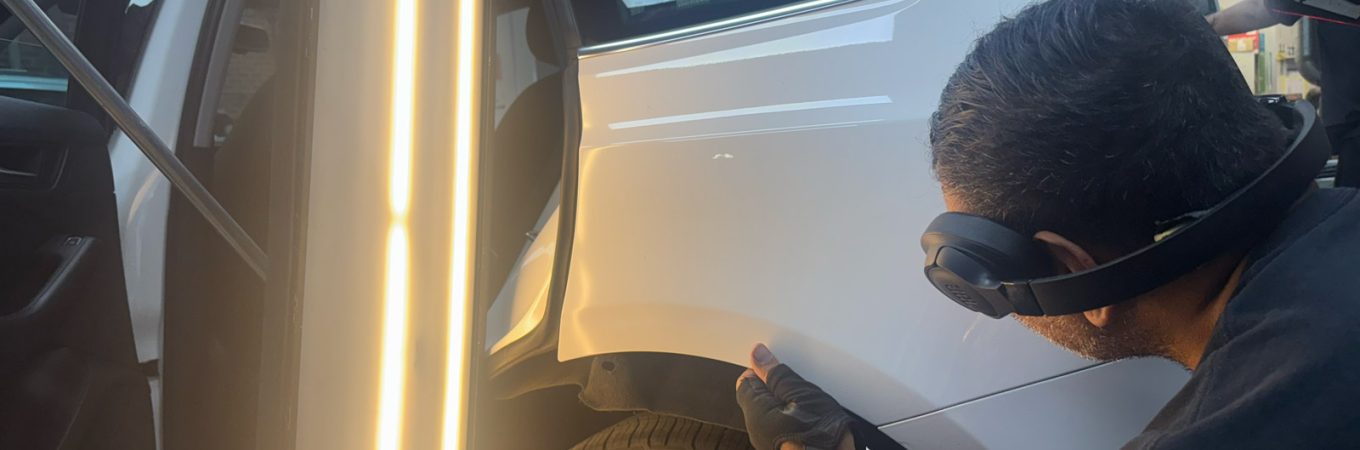
Find the Right workshop for your car
When your car suffers from unsightly dents or dings, it can be tempting to rush to the nearest paintless dent repair (PDR) specialist to restore your vehicle to its pristine condition. However, not all PDR specialists are created equal, and the difference between an expert and an amateur can have a significant impact on the outcome of your repair.
PDR is a delicate and highly skilled technique that requires years of training and experience. While some professionals may claim to offer high-quality services, the telltale signs of an amateur PDR specialist are often visible if you know where to look. In this post, we’ll walk you through the key differences between an expert and an amateur PDR technician so you can make an informed decision when selecting someone to repair your vehicle.
1. Experience and Training
Expert: A seasoned PDR technician will have extensive experience in dealing with a wide range of vehicles and dents. They’ve likely undergone formal training and certification, honing their craft over time. An expert will be able to quickly assess the damage, determine the best approach, and execute repairs with precision.
Amateur: An amateur PDR specialist may lack the depth of experience required to handle more complex damage. They might rely on trial and error to fix dents or use shortcuts, which can lead to poor results or even further damage to your vehicle. It’s important to ask about their training and how long they’ve been practicing PDR.
How to Spot It: Ask the technician about their experience and training. An expert will gladly explain their background, whereas an amateur might be vague or reluctant to share their qualifications.
2. Quality of Tools and Equipment
Expert: Professionals with years of experience invest in high-quality, specialized tools designed for precise and effective dent repair. The tools should be well-maintained, and the technician will use them with great skill and care to ensure a flawless result.
Amateur: An amateur might use generic, lower-quality tools that are not specifically designed for PDR. These tools can lead to imprecise results, visible marks, or additional damage to the vehicle’s surface.
How to Spot It: Ask about the tools and equipment being used. Experts will take pride in their tools, while an amateur might not mention them or could use outdated or subpar equipment.
Enquire about your situation and We will gladly go through our repair process with you here at Dah Cheong.
3. Attention to Detail
Expert: Attention to detail is one of the hallmarks of an experienced PDR technician. An expert will meticulously inspect the dent, analyze the structure of the panel, and use gentle techniques to avoid causing damage to the paint or surrounding areas. The end result will leave little to no evidence of the repair.
Amateur: An amateur may overlook small details, such as the angle of the dent or the pressure required for repair. This could result in an imperfect finish, including slight warping of the panel or visible imperfections in the paint.
How to Spot It: Observe the technician as they work. An expert will work slowly and deliberately, focusing on the precision of the repair. If they rush or seem careless, it could be a sign of inexperience.